20 Books of Summer: Summer 2026

Better late than never, I suppose. Here’s my list of the 20 books I’d like to read this summer.

  1. Ironwood by Michael Connelly
  2. Nobody Does It Better: The Complete Uncensored, Unauthorized History of James Bond by Mark A. Altman and Edward Gross
  3. Carl’s Doomsday Scenario by Matt Dinman
  4. Doctor Who: The Satan Pit by Matt Jones (audiobook)
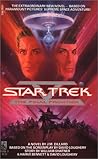
  5. Star Trek V: The Final Frontier by J.M. Dillard
  6. Mister Magic by Kiersten White
  7. It Happened One Murder by Liz Lawson
  8. Phoebe Berman’s Gonna Lose It by Brooke Averick
  9. Star Trek: The Next Generation: Q Squared by Peter David
  10. Razorblade Tears by S.A. Cosby
  11. Sounds Like Love by Ashley Poston
  12. Jane and Dan at the End of the World by Collen Oakley
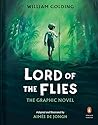
  13. Lord of the Flies: The Graphic Novel
  14. Doctor Who and the Stones of Blood by Terrance Dicks
  15. Slayers and Vampires: An Oral History of Buffy the Vampire Slayer and Angel by Mark A. Altman and Edward Gross
  16. Helpless by Jessica Knoll
  17. The Deal by Elle Kennedy

Leave a comment

Filed under 20 Books of Summer 2026

Remembering Aunt Dolly

Dolly Parton passed away yesterday. She leaves behind a musical legacy that I regret never being able to hear live in concert.

But the thing that Dolly did that had the greatest impact for my family was her Imagination Library. Her program to provide free books to children from birth to the age of five is a wonderful blessing. Shortcake was signed up for the program from her first weeks and we eagerly anticipated our package from “Aunt Dolly” each month.

It’s thanks to Dolly’s Imagination Library that we recveived Little Excavator.

Written by Anna Dewdney, who also gave us the Little Llama series, the book combines a lot of great (and sometimes silly) rhyming with vibrant illustrations, creating a book that Shortcake having read to her. Many times, we’d finish it, only for Shortcake to demand an encore performance.

I can probably recite much of the book for you. And while that fills up a small portion of my memory, the bigger portion is filled with the memories of reading the book with Shortcake, of our laughing together, of her trying to read it to back to us, and the sentimental times as she’d lean into my shoulder as we read together.

Thank you, Aunt Dolly for that wonderful memory that you helped create for us.

Leave a comment

Filed under non-book, Other

Review: Helpless by Jessica Knoll

Helpless

Faye Heron turned her breakup with Henry Spalding into an award-winning, acclaimed episode of a hit television series, following the advice of her writing mentor to “Write what you know.”

After not seeing Henry since the breakup, she returns home for the funeral of her mentor, only to find Henry there with his family. Tempted to stray outside of her marriage, Faye enters Henry’s orbit again, only to find herself in a deserted area with no cell service and no one looking for her because she’s assured everyone she’s working on her next great project. Oh, and Henry is holding her hostage with secrets that he’ll reveal if she doesn’t do exactly what he says.

Jessica Knoll’s Helpless starts with a delicious hook and a compelling (but ultimately unreliable) first-person narrator. However, the further I got into the story, the less convincing the story becomes. Yes, the reader is given a level of voyeurism into what turns Faye on and what makes her tick and why only Henry was the right fit for her. However, as the story unfolds, the twists start to unfold in a way that takes me completely out of the story.

And then, there’s the final twist, which takes willing supsension of disbelief and throws it completely out the window. The ending makes what had been a satisfying guilty pleasure type of story into one where I found myself wondering if I’d wasted my time reading the novel and considering not reading more by Knoll in the future.

1 Comment

Filed under 20 Books of Summer 2026, book review

Review: Star Trek: The Next Generation – Q-Squared by Peter David

Q-Squared (Star Trek: The Next Generation)

Nineteen-ninety-four was a great year to be a Star Trek. The franchise was in a great place, offering new episodes on television, a new movie in theaters, and monthly tie-in novels on our bookshelves. And no novel was bigger than Peter David’s magnum opus, Q-Squared.

I haunted bookstores each Tuesday, hoping the book would finally arrive. And then, one glorious day, there it was, at long last, waiting for me. I couldn’t plunk down my cash fast enough to get a copy and start reading. I’m pretty sure I consumed the novel in record time, telling myself I should savor it, but unable to resist turning just one more page.

Since his first appearance in the premiere of TNG, speculation had run rampant that the self-proclaimed “Squire of Gothos” from TOS, Trelliane, must somehow be connected to the Q Continuum. And what if the two met and faced off — Who would win? What would happen?

David had already written a tie-in novel featuring Q, the superlative — and hilarious — Q in Law that saw Q crossing paths with Luxwana Troi. So, we knew David could translate Q to the printed page. The only question was could he do it on a bigger stage in a way that would be satsifying to all of us who had crafted our own version of Q vs Trellaine in our minds for seven years.

The answer as, of course, he could. Again, I consumed Q-Squared in record time, loving every moment of it. It then sat on my shelf in a place of honor as one of those favorite books that I was actually lucky enough to get David to autograph during my sole visit to DragonCon. Luckily, i still have that copy, the one I read all those years ago and loved. Scenes from it still come to mind when I think about some of my favorite reading moments.

And yet, somehow over the years, I’ve never revisited it. Part of it was a concern of tampering with the memories — what if it wasn’t as superlative as I recalled? What if I tainted my memory of it? But when David passed away, I decided to revisit a few favorites from one of my favorite authors. So it was this summer that I picked up Q-Squared in paperback and sat down to visit an old friend.

Within the first few pages, any fears of not enjoying it as much as I had thirty-plus years ago were erased. Instead, a big smile was probably across my face, and I found myself enjoying this great Trek story again.

Long before Marvel brought a multi-verse to our screens in the MCU, David was playing with the concept on the printed page. Three “tracks” run parallel to each other, with Q and Trellaine crossing them at will during the course of the story. Trying to summarize exactly what happens would ruin some of the fun of reading the book — and honestly, I’d probably not do any of them justice here. Suffice it to say, each track is fascinating and full of David’s usual assurance and story-telling prowess. And don’t worry — you won’t get confused following the threads once the universes start to collide.

Where the novel really shines is how David pulls in various threads of Trek canon into the battle of Q and Trellaine. At one point, Q is banished by Trellaine, spending centuries trying to get back to the events unfolding across the three tracks. My inner geek lapped up with a spoon the idea that Q was somehow connected to Gary Mitchell’s gaining powers in the second TOS pilot to the point that I can see reflections of Q now in Mitchell and Elizabeth Dehner’s growing arrogance at gaining power.

As with the original time I read it, this one lingered with me long after I finished reading the novel. David’s take on Q and the crew is spot-on and some of the most enjoyable writing I’ve read in a while.

It holds up. It absolutely holds up.

1 Comment

Filed under 20 Books of Summer 2026, book review, Star Trek

Audiobook Review: Doctor Who and the Stones of Blood by Terrance Dicks

Doctor Who and the Stones of Blood: 4th Doctor Novelisations

Is it a bit of a double-dip? Sure.

But is it one that I enjoyed? Absolutely.

David Fisher wrote the original script for season 16’s “The Stones of Blood” but was apparently not pleased with Terrance Dicks’ adaptation for the Target range of Doctor Who novels. So, a decade or so ago, we got Fisher’s take on the script, which I know I’ve listened to but don’t recall many of the details about.

With the Target line reaching the end of the line*, the range decides to give us the chance to visit Uncle Terrance’s original Target version. And this version is performed by the range’s go-to reader, Geoffrey Beavers. I’m on record as saying that Beavers could read a take-out menu that the production team used to order during a late-night rewrite session and I’d give it a chance. So, here we are, visiting “The Stones of Blood” yet again.

*They’re going to give us an audiobook version of “The Paradise of Death” later this year, which I can’t decide if I want to put myself through that one again or not. It’s read by Jon Culshaw, so that could be fun. But then again, it’s “The Paradise of Death,” and that was, well, not my favorite. And yet the completionist in me says I should try it.

“Stones” comes from an era where I have a mental image of Uncle Terrance handcuffed to a chair, having only bread and water and a shooting script and being forced to churn out multiple Target novels per year. Gone are the early days when Dicks would offer up some interesting backstory for various supporting characters or maybe a bit of worldbuilding. Instead, we get a fairly straightforward translation of script to page.

“Stones of Blood” does have a few embellishments — the campers who perish by Ogri in episode four get a name and some backstory (minimal, mind you). And various cult members get a bit more than just being a name and a possible distraction to the plot and the Doctor in his quest to find the third segment of the Key to Time.

The strengths and weaknesses of the television version are on full display here. The first two installments on Earth are well done, feeling a bit like a mix of the gothic nature of the Hinchcliffe era, distilled into the Williams era desire to see the Doctor do more than just wander time and space aimlessly. It’s once the story moves beyond its gothic elements and tries to become a sci-fi story set in hyperspace, complete with alien justice machines, that the pacing and story go off track a good bit. It’s not that the concept of the Magara isn’t interesting; it’s just that it feels like episode four treads a lot of water to get the characters to the revelation that Ms. Faye is the culprit they’re looking for.

I keep coming away from “Stones” wanting to like it more than I do. Any story with Amelia Rumford should be a classic, and yet somehow “Stones” comes up a bit short in the final analysis.

But I have to give Terrance Dicks credit for adapting the story well for the page. Again, it’s been a hot minute since I listened to Fisher’s take on his script, but I recall liking this one better. This may send me back for another listen to that take on the script, which I think included a bit more world building and Fisher’s penchant for humorous asides to determine which I liked better. I do think I’ll take a break between audiobooks at the risk of becoming overly familiar with the story and checking out of Fisher’s version.

Leave a comment

Filed under 20 Books of Summer 2026, audio book, audio book review, audiobook review., book review, Doctor who

Graphic Novel Friday: Lord of the Flies

Lord of the Flies: The Graphic Novel (A Penguin Classics Hardcover)

I wasn’t a huge fan of Lord of the Flies when it was assigned in my high school freshman English class. At one point, as my teacher was attempting to get across a point about symbolism and that the author fully intended us to respond to the text in a certain way, I wanted to write my own great tome of literature so I could then tell English students everywhere that I chose each word in the novel not for its symbolic value to literature but becuase I had to meet a deadline.

So, when I heard a new series was coming to our screens that adapted Lord of the Flies for a new generation and that it might have a potential future showrunner for Doctor Who connection, I was torn. I despised the original text, but I would want to revisit it before watching the show.

The solution came to me while browsing my local library and discovering they’d created a new graphic novel version of Lord of the Flies. So, I decided to give it a chance.

Has my opinion of the text changed in the past 40 years? Not really. I still don’t love it. But at least this time around, the beauty of the illustrations helped me to enjoy it a bit more. It also made reading the text go a bit faster, which probably helped my overall experience.

Will Lord of the Flies ever rank as one of my favorite books? Probably not. But at least this retelling of the story helped me appreciate what William Golding is trying to convey a bit more than I did during my high school days.

2 Comments

Filed under 20 Books of Summer 2026

Forty Years of Fandom

Thanks to the power of the Internet, I’ve determined that today is the fortieth anniversary of my becoming a Doctor Who fan.

I’d been a hardcore Star Trek fan for a while — since the middle part of sixth grade when Star Trek II: The Wrath of Khan aired on ABC. I’d seen most of the original 79 installments of classic Trek and read a lot more the stories via the James Blish adaptations from my local library.

I was aware Doctor Who existed, though I’d never watched an episode. I’d seen books at my local Waldenbooks and seen some at the library in the sci-fi section as I perused for Star Trek books. My awareness of Doctor Who was pretty much that it featured multi-part stories and that I could never predict when part one of a story would air. Being a person who loves context, I wasn’t ready to jump into part seventeen of a story and miss all that had come before it

So it was on a warm summer evening in San Jose, California that my dad asked me if I’d seen Doctor Who. I replied I hadn’t and detailed my reason I hadn’t watched.

He then asked a fateful question of why not try it tonight because it could be part one.

He flipped over to KTEH 54 and in moments, the Davison starfield credits were unfolding on my screen and I heard the theme tune for the first time. As they proceeded, I was hopeful it would be the first installment of a story and, lo and behold, it was. “Time Flight” part one aired that night.

I had no context for the story. I knew nothing about it. I recall being curious as all get out how this huge interior could be inside the relatively small blue box and if the Doctor and companions were always the same group and how they’d come to travel together. I had no idea that “Time Flight” followed on one of the pivotal moments in not only 80s but all of Doctor Who. I didn’t know the entire history of the program, nor did I understand that fandom didn’t love this story.

All I knew was that by the time we got to the cliffhanger with the Doctor being surrounded by some strange-looking monster, there was no way I was missing the next installment.

What I didn’t know was I’d stumbled into fandom on KTEH at a great time. Within a few months, they aired Colin Baker’s first season as the Doctor (twice through, because I imagine it cost a pretty penny), then moved on to show every complete Doctor Who serial in the catalog. I got to see an installment each weekday and then a full serial in episode format (the way it should be) each Saturday night. It took me about a month to set the VCR for that Saturday night screening, but I finally did. This helped me experience all of what was available within two years.

Looking back, I see that I had an embarrassment of riches. When I hear stories of other fans, trading for difficult to see copies of stories on VHS, I find myself realizing I was a bit spoiled because I got to see so much Doctor Who so quickly.

It also shows that any story can be a jumping-on point. “Time Flight” isn’t exactly the best story ever, but it had enough to intrigue and hook me. I will always be a bit sentimental about it, even if now I can see that it’s pretty thin for a season when the budget was gone. But doggone it, they were still trying.

As Doctor Who is at a crossroads right now, I find myself taking the long-term view. Yes, we won’t get any new installments for a bit. But the show has survived this kind of hiatus before, and will this time. One thing modern Who has done is make it cool to be a fan of the show — and believe me, there were times it wasn’t cool. I still flinch at my younger self trying to explain to my buddies who saw two minutes of “Power of Kroll” why what they saw was a pivotal part of the story and not just a joke.

I just finished a long rewatch of every Who serial from 1963 to the TV Movie in 1996. I hadn’t really watched the show in order for a long time (probably since my initial viewings on KTEH) and it was an absolute delight. A great reminder of why that warm afternoon forty years ago was so memorable.

2 Comments

Filed under Doctor who

Review: Star Trek V: The Final Frontier by J.M. Dillard

The Final Frontier (Star Trek: The Original Series; Movie Novelization #5)

I was in my local theater on opening day for Star Trek V: The Final Frontier. However, there were few surprises in the movie thanks to Pocket Books’ publication of J.M. Dillard’s tie-in novel released a week or so earlier. I’d picked up the novel at my local bookstore and blazed through it in record time.

Dillard’s adaptation of the screenplay is faithful to what we see on-screen. But I’d argue that Dillard actually improves on the source material by giving readers a few deeper glimpses into the characters and their history than we had time for on screen. Particularly of interest are the glimpses into the various types of “pain” that Sybok helps his followers come to terms with over the course of the story. (The movie only allows us to see inside McCoy and Spock’s journeys on-screen). The background gives better motivation for why various parties are willing to follow Sybok after confronting their personal pain moments. Dillard even delves a bit deeper into the roots of Sybok’s obsession with Sha Ka Re and the Vulcan discipline that allows him to help his followers.

There’s even a great deal of time and consideration given to connecting Spock and Sybok before the revelation that they’re brothers comes out into the open.

In short, Dillard’s novel adds to the screenplay and story in ways that made me feel a bit more forgiving toward the movie then — and I still do today. I do wish Dillard had been given a script to work from that included Shatner’s original vision for the final confrontation with the alien being on the planet. Based on how Shatner has described his rock creatures and the finale in his memoirs, this could have been truly spectacular on the printed page. And it’s not like Trek tie-in novels haven’t used earlier versions of a script for the adaptation — see only Dillard’s original adaptation of Generations, which included Kirk’s original fate rather than the reshot ending.

Is Star Trek V a great movie? No, it’s probably not. But I’d argue it’s a solid one that fundamentally understands the central dynamic of the Big Three. It feels like an early third-season episode of the original series — and while many are quick to deride season three, there are still some gems in there. I’d argue that Shatner has a better understanding of what Trek is than J.J. Abrams does, but that’s a debate for another time.

Overall, this is a nice complement to a movie that I think a lot of fans are too quick to overlook.

5 Comments

Filed under Uncategorized

Audiobook Review: Doctor Who – Power of the Daleks by John Peel

Doctor Who: The Power of the Daleks: 2nd Doctor NovelisationMy initial viewing of classic Doctor Who was incomplete, thanks to the BBC’s purge of many of the classic serials from the 60s and 70s. All of Patrick Troughton’s first two seasons were incomplete and my only exposure to “Power of the Daleks” before 1993 was the summary in the Programme Guide and a glossy magazine-sized photo novel I picked up at a local convention that combined the original script with the surviving telesnaps.*

*I’m sure copies of the soundtrack were running around, but in the pre-Internet days, I had no way to access them, much less know they existed.

The Target adaptation of “The Power of the Daleks” was one of my first opportunities to experience the story in a way that closely resembled the televised version. I looked forward to it because I’d found John Peel’s adaptations of two William Hartnell-era Dalek stories enjoyable, even if I hadn’t loved his first entry in the New Adventures line.

“Power” is a fascinating adaptation. Freed from the page count of most of the range, Peel is allowed to really run with the adaptation, not only developing the characters far beyond what could be done in six episodes, but also introducing a few that didn’t feature in the original version. Beginning with the closing moments of “The Tenth Planet,” Peel gives readers a more faithful version of the original regeneration than we got in Gerry Davis’ Target adaptation of “Tenth.” Peel is also able to tie-in a lot of continuity from twenty-six seasons of classic Doctor Who, making his version of “Power” feel like a hybrid of a Target novel and a New Adventure entry.

And yet, for some reason, back in 1993, I didn’t appreciate it. I felt it lacked something. Looking back I couldn’t tell you what it was I think the novel lacked because thirty years later, I’ve just spent an enjoyable chunk of time revisiting the novelization in audiobook form and found it a delightful entry in the range.

I wonder if part of that is that I’ve been able to experience the story in different ways since that initial reading. Thanks to the Internet, I was able to get bootlegs of the original soundtrack and later copies of the soundtrack with linking narration. And, of course, there’s the animated version, the full serial to be restored using animation for all the episodes, not just a missing segment or two. My appreciation of the story has grown over the past thirty years, so it shouldn’t be a surprise that I appreciate the Target version of the story more now than I did back then.

I think a small part of my enjoyment this time around is the performance by Nicholas Briggs. Since it’s a Dalek story, we know that Briggs will be on hand to perform the Dalek voices as close as possible to the original screen versions as he can. But, there’s more to it. Briggs’ performance of the entire cast is extremely well done. It’s a shame that we didn’t get more of Briggs performing other stories during the audiobook range.

Another part of why the story works so well is the original script by David Whittaker. Whittaker took the Daleks in some fascinating directions during the Second Doctor’s tenure, casting them as far more cunning, devious, and malevolent than we’d seen in the first four Dalek stories. The focus of the story is a human colony, with undercurrents of rebellion and unrest bubbling. Enter a couple of Daleks, who are willing to manipulate the human inhabitants to get what they want, in this case, power to reawaken and rebuild themselves. The title takes on layers as you realize the Daleks are also manipulating everyone around them in a bid to take power in the colony and possibly rebuild an army using various supplies. There are echoes of modern Who in the story, especially the Ninth Doctor’s warning that a single Dalek can be incredibly dangerous in the superlative “Dalek.”

What we’re left with is a superb story, adapted with confidence and panache by Peel. This is one of the Target novels that not only tells the original story well, but also fills in a lot of details and backstory. It’s a book that many fans would eat up with a spoon, which is what I did upon revisiting it here.

Leave a comment

Filed under audiobook review, book review, Doctor who

Audiobook Review: Moonraker by Ian Fleming

Moonraker (James Bond, #3)Part of my journey into the world of James Bond was ABC airing what felt like a good number of Bond movies during one particular summer in my mid-teens. The interest in the films led me to the original novels, which was nice since my local library had a great collection of them. It feels like a lot of what aired that summer was from the Roger Moore era of Bond, though all of them skipped the Bond movie I really wanted to see from that era, Moonraker.

So it was that one summer afternoon when I was feeling particularly bored, that I rented Moonraker and sat back for two hours of Bond at its best. Or so I thought. In the years since that time, my memories of the film are that it’s not exactly one of the best entries from the series and that it feels like the films are trying way too hard to chase George Lucas’s little space epic.

Close to forty years later, I was seized by a sudden urge to rewatch Moonraker a few weeks ago. And since the movie was streaming, I decided I’d spend an evening revisiting it.

For the first hour and a half, Moonraker is entertaining enough, if you’re willing to turn off certain parts of your brain. Yes, Jaws randomly shows up in places he has no business being and characters keep crossing paths far too coincidentally. But the investigation into who stole the Moonraker shuttle and various set-pieces for Bond almost makes up for these wild coincidences happening on screen. Continue reading

1 Comment

Filed under audio book review, audiobook, book review